
Why North Dartmouth windows ask for different answers
Choosing window treatments in North Dartmouth is mostly a question of which house you live in, because the housing around the showroom changes every few miles.
A shingled cape near Padanaram has small panes and slim trim, so anything bulky looks heavy against it. A mid-century ranch off Slocum Road usually has one big picture window in the living room and a slider out back, which need covering in completely different ways. The farmhouses toward Russells Mills have deep nineteenth-century sash, with casings deep enough to take a shutter frame or a shade mounted fully inside. And on the South Dartmouth side, rooms that look over Apponagansett Bay catch hard glare off the water through the late afternoon.
None of that is solved by one product. That is why we carry the whole Hunter Douglas range and start every project at the window itself.
Shades, blinds, shutters and drapery
Honeycomb shades
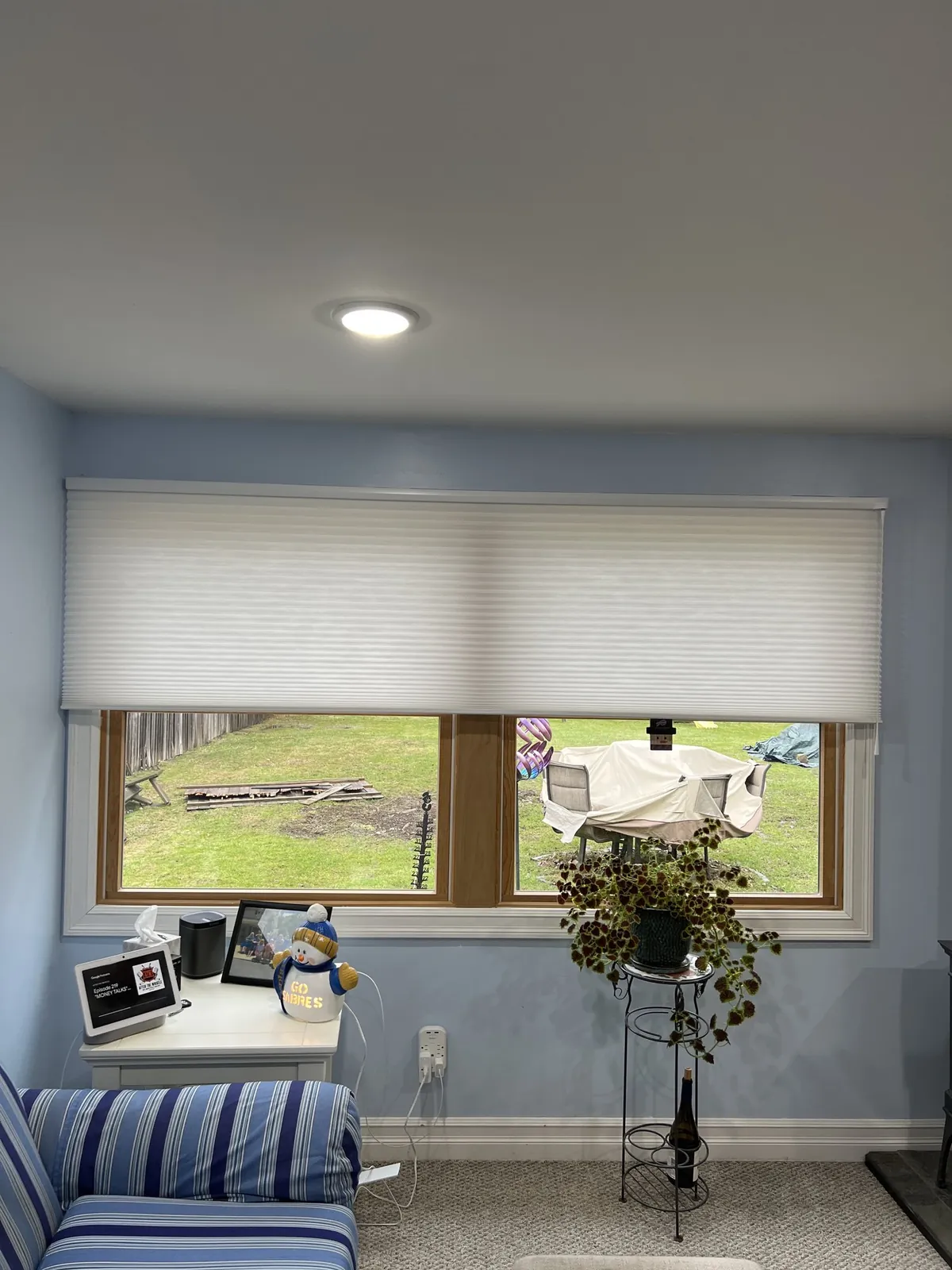
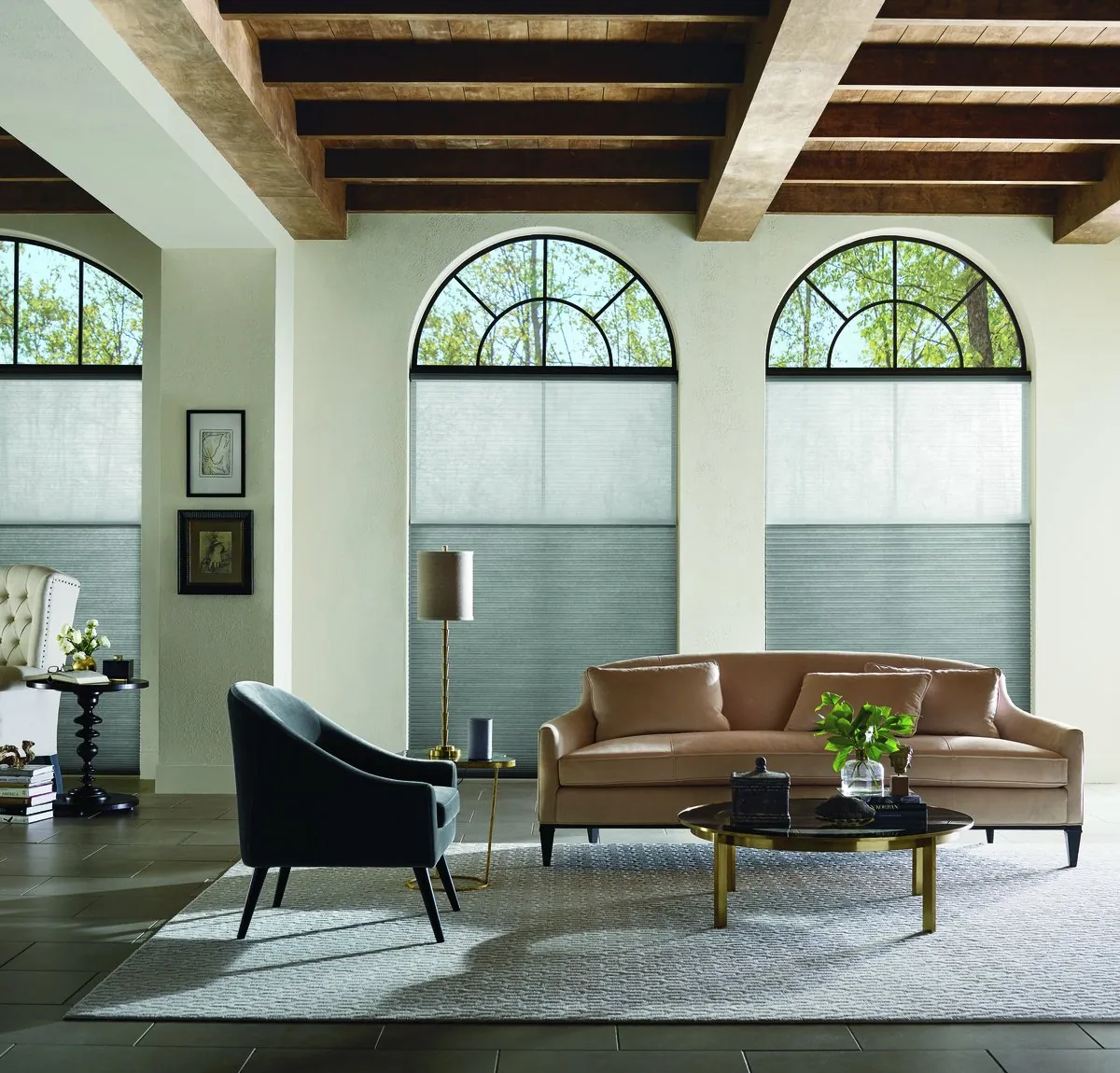
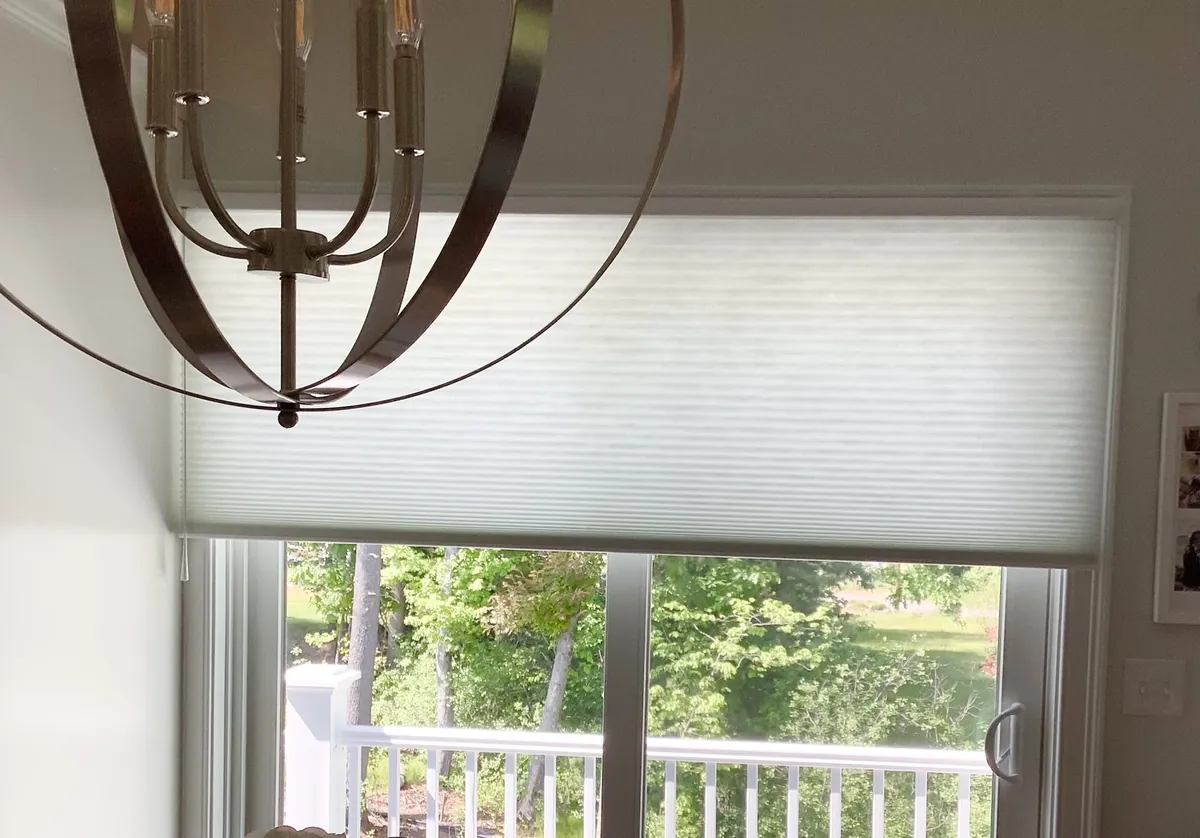
Duette and Applause hold air in their cells, which is why a room stays more comfortable through a New England winter.
Roller and screen shades
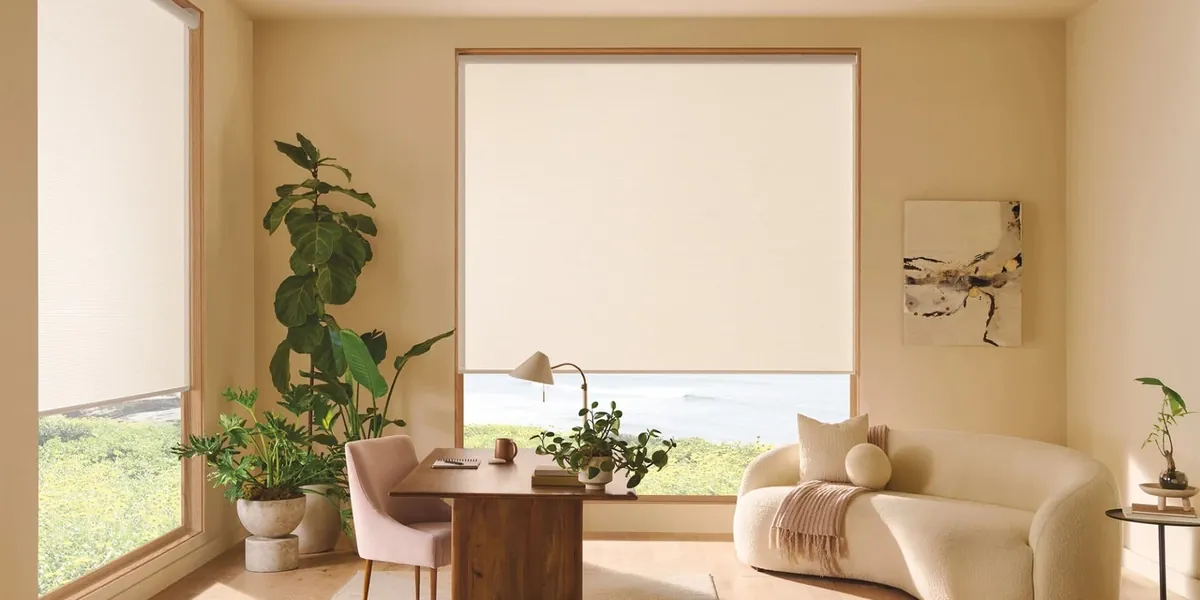
Clean and simple. Screen fabrics come in different openness, which decides how much view you keep and how much glare you cut.
Sheer shades
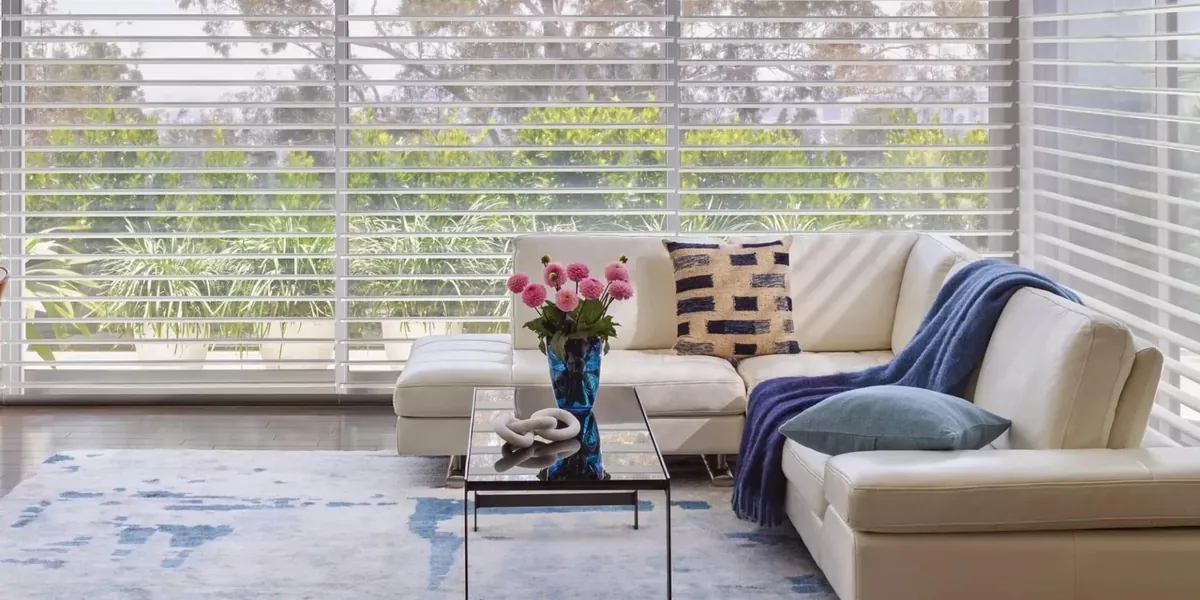
Silhouette, Pirouette and Luminette soften daylight with fabric vanes you can tilt.
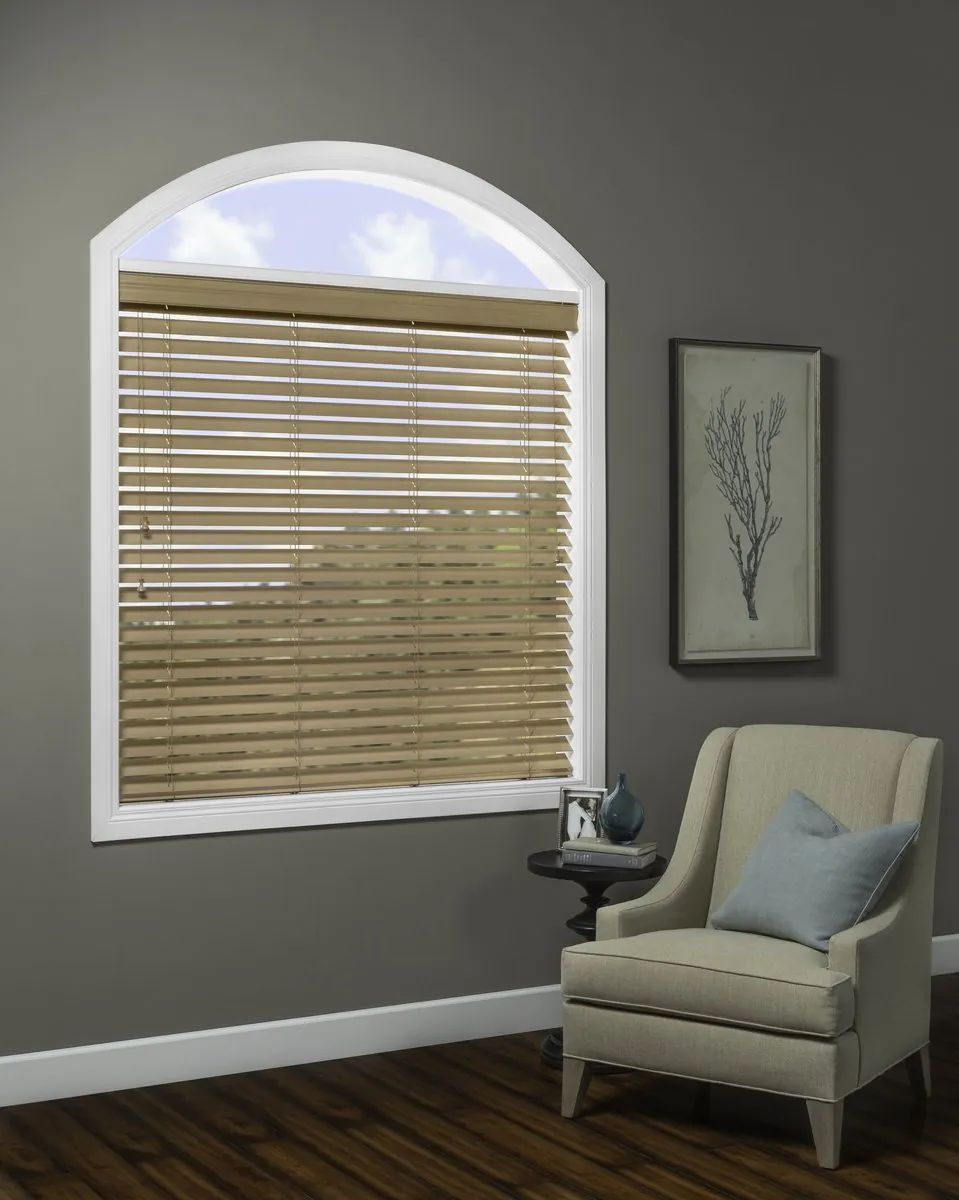
Blinds
Wood, faux wood, metal and fabric blinds, including Parkland, EverWood and Aria, for precise light control slat by slat.
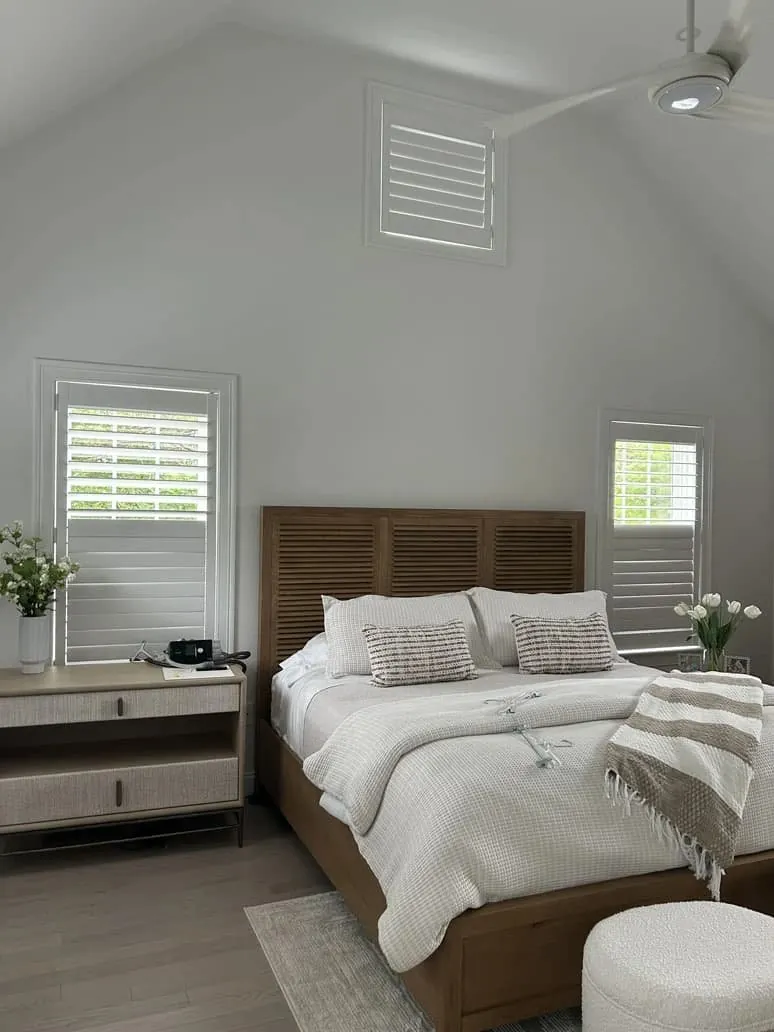
Shutters
Palm Beach, NewStyle and Heritance shutters, built to the opening, with louver sizes to suit the window.
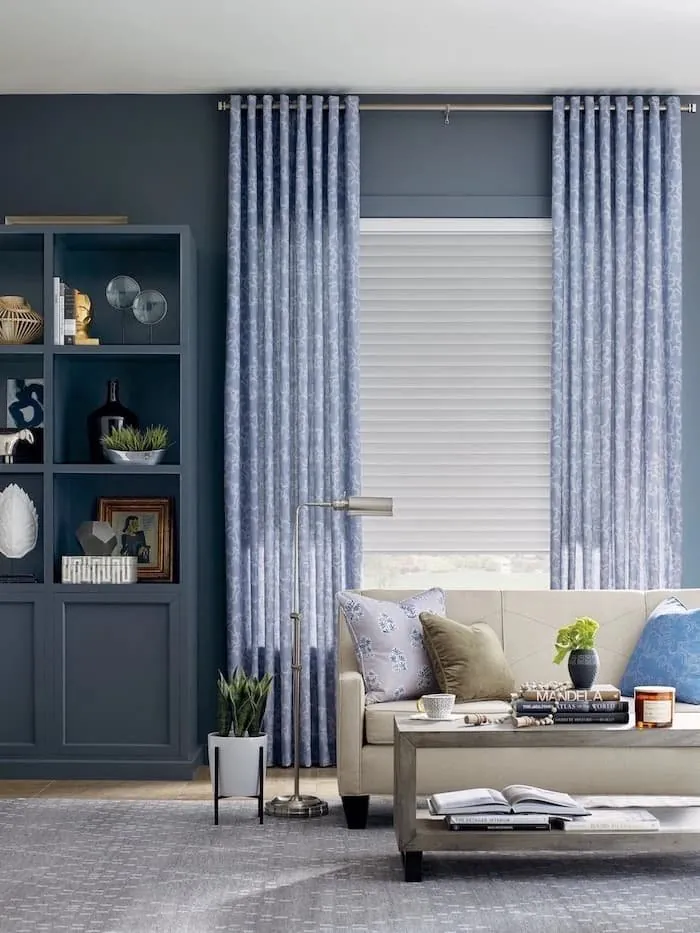
Drapery
Custom drapery to frame a window, warm up a room or layer over a shade.
Starting with light, privacy and the window itself
Most people come to us with a feeling about a room rather than a product name. The bedroom is too bright at dawn. The television disappears behind glare every afternoon. The front room feels exposed to the street at night. Those are the right places to begin, because the answers point straight at the fabric and the mechanism.
Light first. A light-filtering fabric keeps a room bright while blurring the view in; a room-darkening fabric shuts it down for sleep. Sheer shades sit between the two, letting you tilt vanes to soften daylight without losing it.
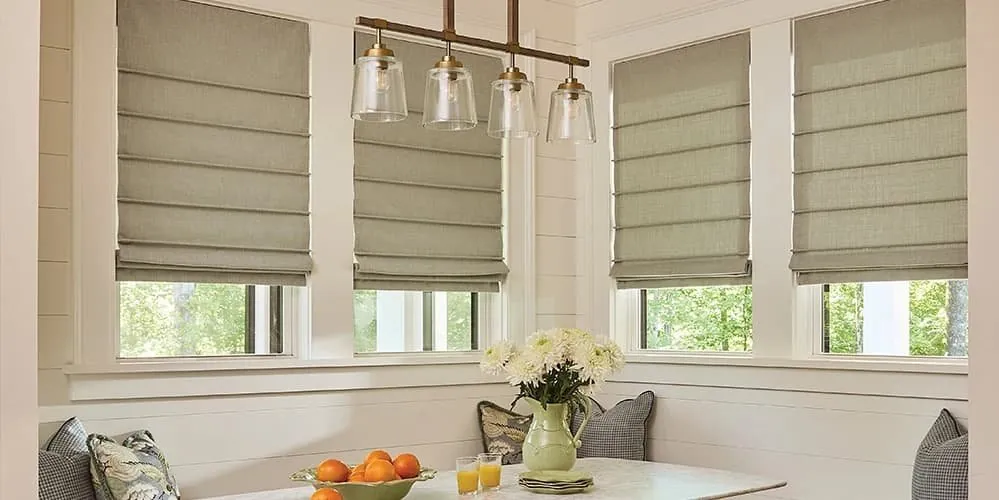
Privacy next. Top-down, bottom-up honeycomb and Roman shades let you cover the lower half of a window on a street-facing room while the top stays open to the sky, which suits capes and colonials set close to the road.
Then the window. Depth decides whether a product mounts inside the casing or outside it. Width decides whether one shade will do or a run of two or three is better. Height matters too: a tall gable or a window above a tub is a good case for motorization, so nobody has to reach.
Reading the house you live in
Older colonials and capes near Padanaram usually suit products with a slim profile that sit neatly inside the casing: honeycomb shades, Roman shades in a flat fold, or wood blinds with a narrow slat. Shutters work here too, though they change the look of a room more and are worth seeing in place first.
On a mid-century ranch, the picture window is the star. Roller shades, sheer shades or a wide honeycomb keep the view clear when raised and stack small at the top. Sliders to the deck want something that moves sideways, such as Luminette, a vertical honeycomb or vertical blinds, so the door opens freely.
The deep sash on the farm properties toward Russells Mills is a gift for plantation shutters, which can sit inside that depth and read as part of the architecture. It also suits Roman shades mounted fully inside, which keeps the old trim on show.
For bay-facing rooms, think about the afternoon. Solar screen fabrics and the lighter roller fabrics cut glare off the water while leaving the view in place. Choosing the openness is easier in person, at the time of day the glare is worst, so we bring samples to hold up at the glass.
How a project comes together
Good window treatments depend as much on measuring and fitting as on the product, so we keep the whole job in our own hands.
- Request a consultation and tell us which rooms you are thinking about.
- We visit with samples in the van, so the showroom comes to you, and look at each window with you.
- We measure every opening carefully, inside and outside the casing, and note anything unusual about the frame.
- You receive a free estimate for the products and installation.
- Your order is made by Hunter Douglas to our measurements.
- A certified Hunter Douglas installer fits everything and shows you how it works.
Cordless, motorized and automated
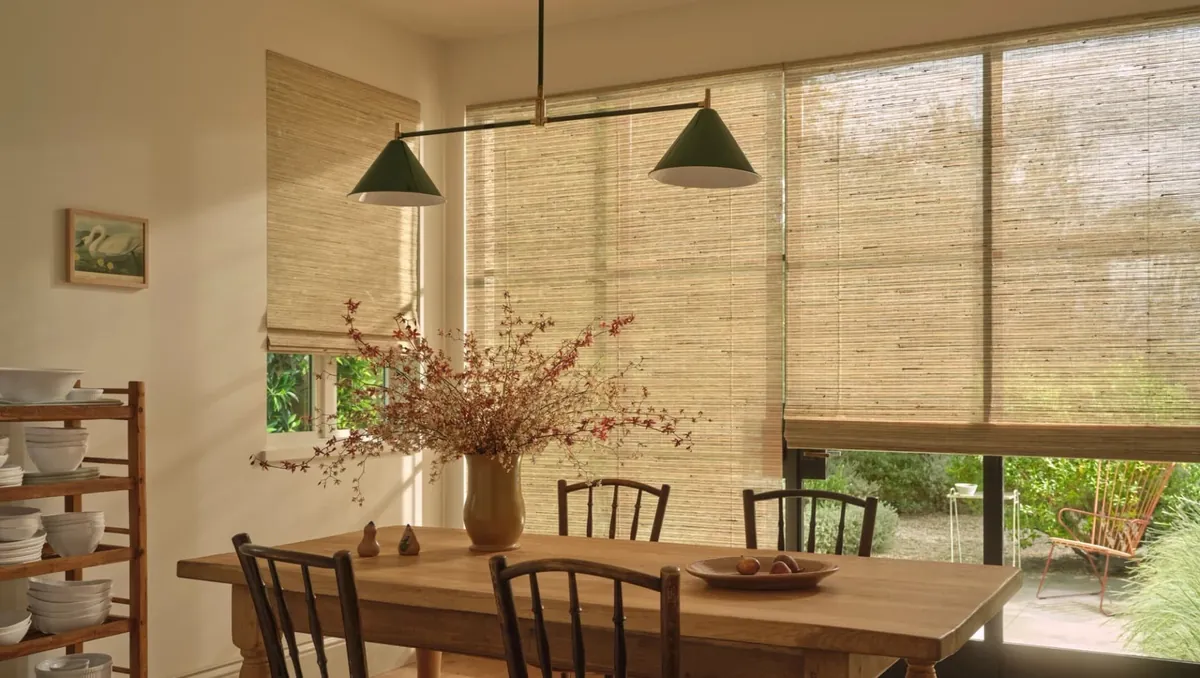
Cordless lift is now the norm on most Hunter Douglas shades, which is safer for children and pets and keeps the window cleaner looking. For windows you cannot reach, or a house where you want shades to move on their own, PowerView motorization adds remote and app control and schedules. Read more on our motorized blinds and shades and window covering automation pages.
Fabric, color and how the room is used
Color reads differently at the window than on a sample card, because daylight comes through the fabric as well as falling on it. A warm white can turn cream with the sun behind it, and a gray can go faintly blue. That is the main reason we would rather choose fabric with you in the room, at the glass, than from a picture.
Think about how each room is used through the day, too. A kitchen wants window treatments that wipe clean and let in plenty of morning light. A bedroom usually wants a room-darkening fabric, perhaps layered with a sheer. A home office wants glare off the screen without losing the outlook. A sunroom wants fabrics that hold their color in strong light.
Looking after what you have
Not every visit has to be about something new. If window treatments you already own have a broken cord, a lift that will not hold or a slat that has come loose, ask us about blind and shade repair. Our guide to caring for fabric shades covers the everyday cleaning that keeps them looking right.
Your town has its own page
This page covers the North Dartmouth area as a whole. Each town we serve has its own page with notes on its housing and the services we offer there, including Dartmouth, New Bedford, Westport, Fairhaven, Mattapoisett, Marion, Rochester, Freetown and Little Compton. Further afield, our Franklin and Sagamore showrooms cover their own towns; see store locations for the full list.
Why buy from a Hunter Douglas Gallery dealer
A Gallery dealer carries the full Hunter Douglas family, so the advice you get is about your window, not about what happens to be in stock.
Installation is certified by Hunter Douglas. Consultations happen in your home, with samples brought in our vans. Estimates are free. If a room needs more than a single product, our interior design consultations help pull color, fabric and light together, and we look after repairs and automation long after the order is fitted.
Read more on our Hunter Douglas dealer page or see all our services.
Window treatment questions
Which product handles afternoon glare best?
For a room facing the water or a western sky, solar screen and lighter roller fabrics are usually the first choice, because they cut glare and keep the view. Sheer shades with tiltable vanes are another good answer. Our guide to the best shades for sun and glare goes further.
Do shutters fit older windows?
Often very well. Deep sash gives a shutter frame room to sit inside the opening, and frames can be made to suit openings that are slightly out of square. See shutters for older windows.
Shades or blinds: which should I choose?
Blinds give the most precise control over light, slat by slat. Shades are softer and more varied, with options for insulation, sheer light and room-darkening. Our guide on how to choose between shades and blinds lays out the trade-offs.
Can I mix products in one room?
Yes, and it often looks better. A Roman shade on a small side window can sit beside a honeycomb on the main window in matching fabric, or a shade can be layered under drapery.
Do you measure and install, or do I?
We do both. Measuring for made-to-order products is easy to get slightly wrong, and our installation is certified by Hunter Douglas.
Is the estimate free?
Yes. Estimates are free.
Ready to look at your windows?
Request a consultation and we will bring the samples to you, or call the North Dartmouth showroom using the call button and talk it through.