
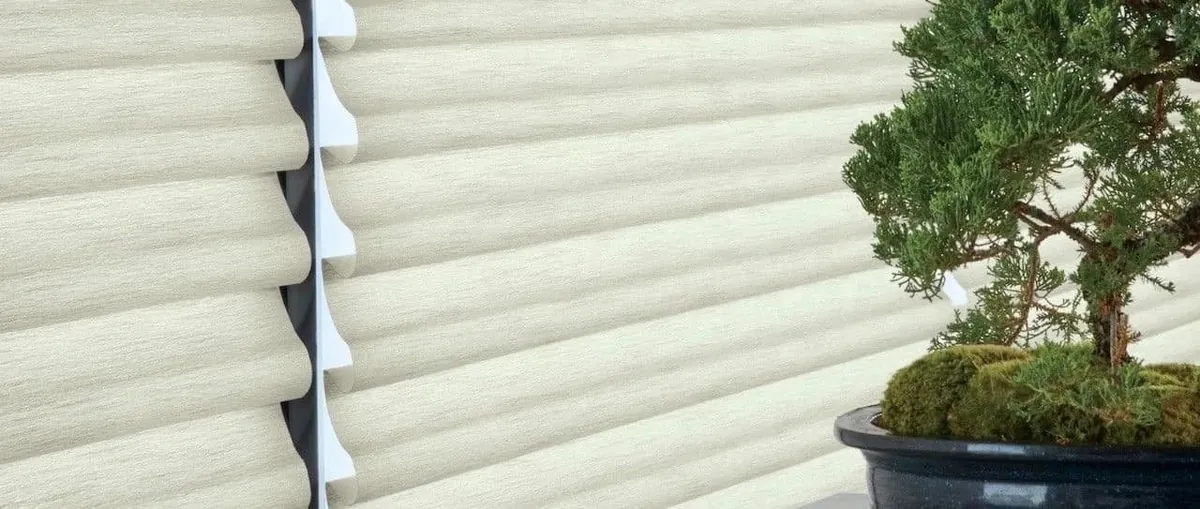
Soft light for bright rooms near the water
Fabric blinds suit a lot of the rooms we see from our North Dartmouth showroom, especially the bright ones. South Dartmouth’s water-facing living rooms take hard afternoon glare off Apponagansett Bay, and a hard slat either lets that light in as stripes or shuts it out altogether. A fabric vane does something in between: the light passes through the material itself and spreads across the room.
The rest of the territory has its own reasons. The ranches off Faunce Corner Road and Slocum Road, built in the 1960s and 1970s, tend to have big picture windows that look stark with a plain blind. Padanaram’s older colonials and shingled capes often have front rooms close to the street that need privacy without feeling closed in. Out toward Russells Mills, farmhouse sash sits deep in thick walls, which leaves room for a blind to hang inside the frame and keep the old trim on show.
Fabric blinds and their close relatives
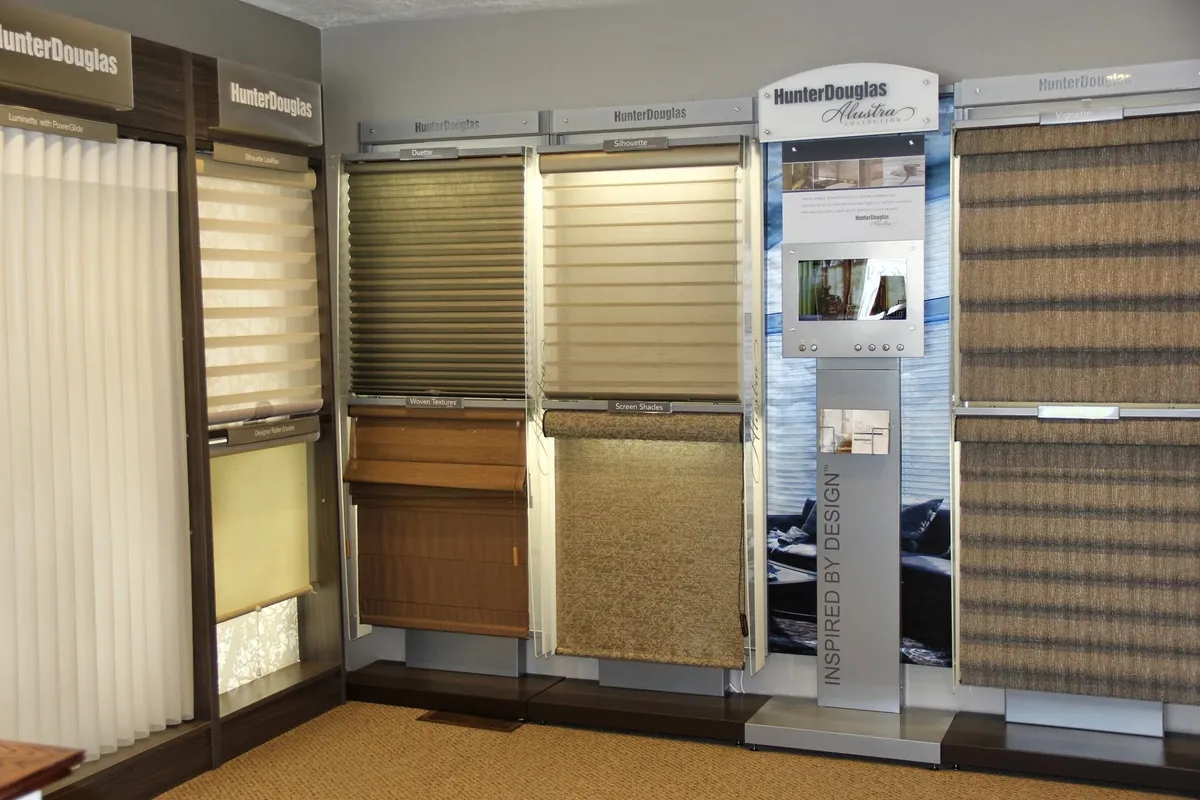
Hunter Douglas makes its soft-vane blind as Aria. It sits in a family of soft window coverings that control light with fabric vanes, and it helps to see them side by side, because each one handles daylight a little differently.
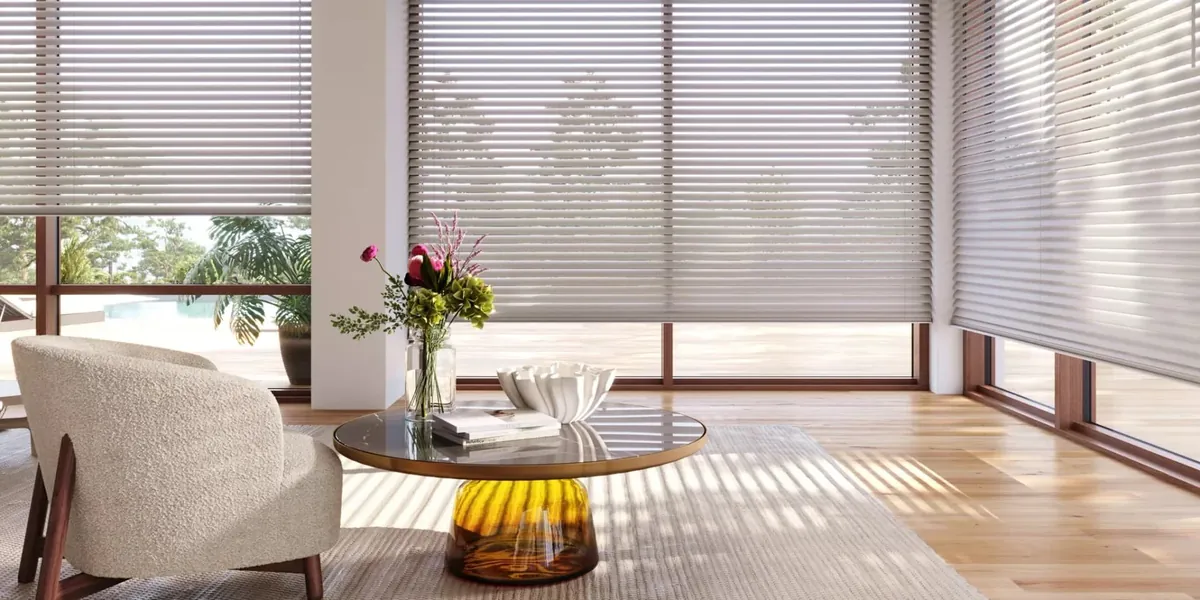
Aria soft-vane blinds
Horizontal vanes made of soft, translucent fabric that tilt like a blind. Light glows through the vanes themselves.
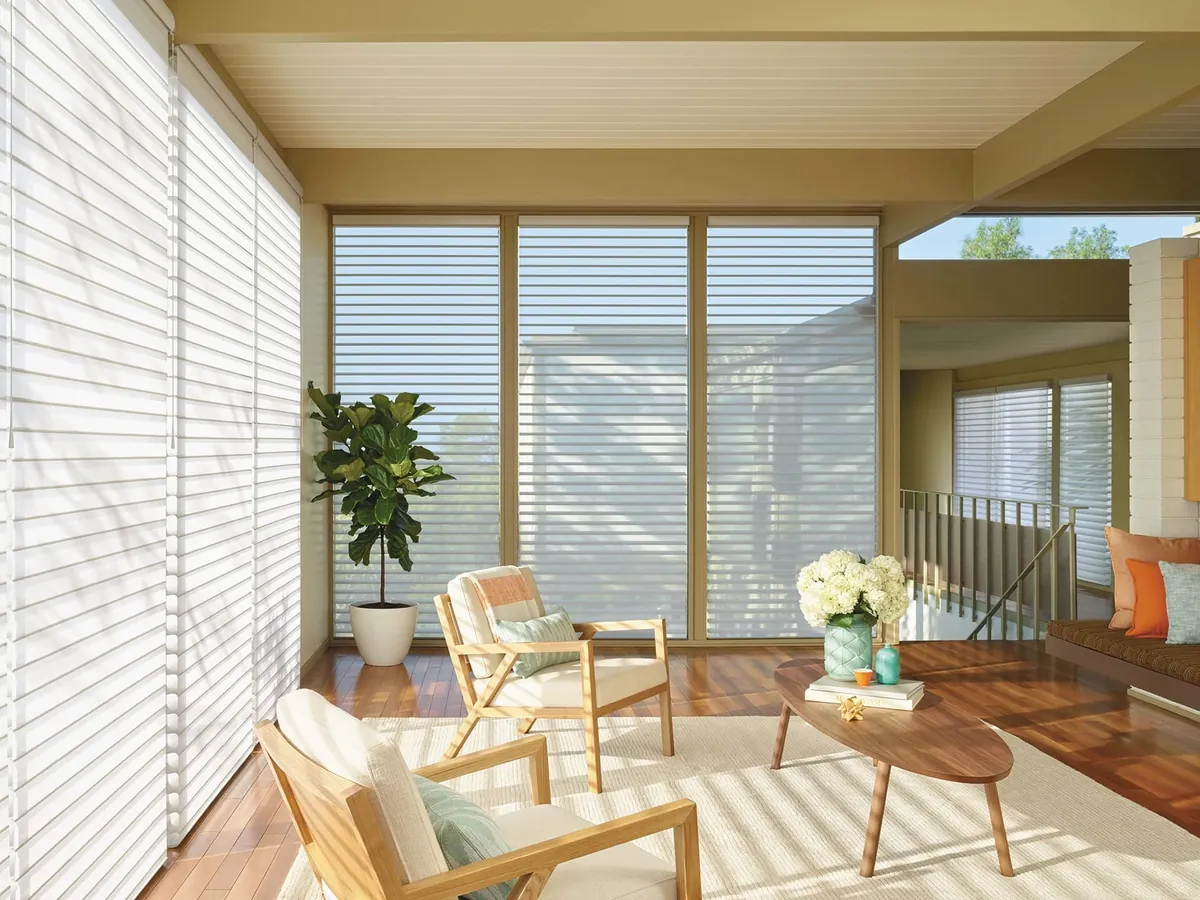
Silhouette sheer shades
Fabric vanes floating between two sheer layers, so the light is filtered even with the vanes open.
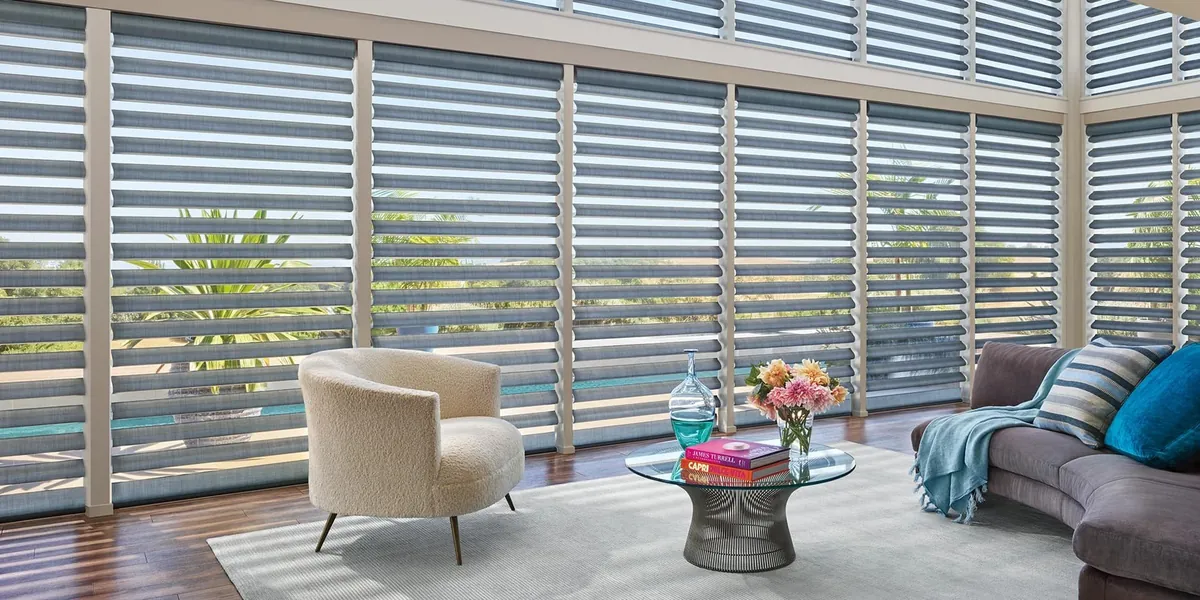
Pirouette shades
Soft, rounded fabric vanes attached to a single sheer backing, which open and close in smooth folds.
What makes a fabric vane different
A traditional blind is made of hard slats: wood, alternative wood or aluminium. When they are open, sunlight comes through the gaps; when they are closed, the solid slats block it. That works well, but on a bright afternoon the stripes of light and shadow across the floor can be harsh.
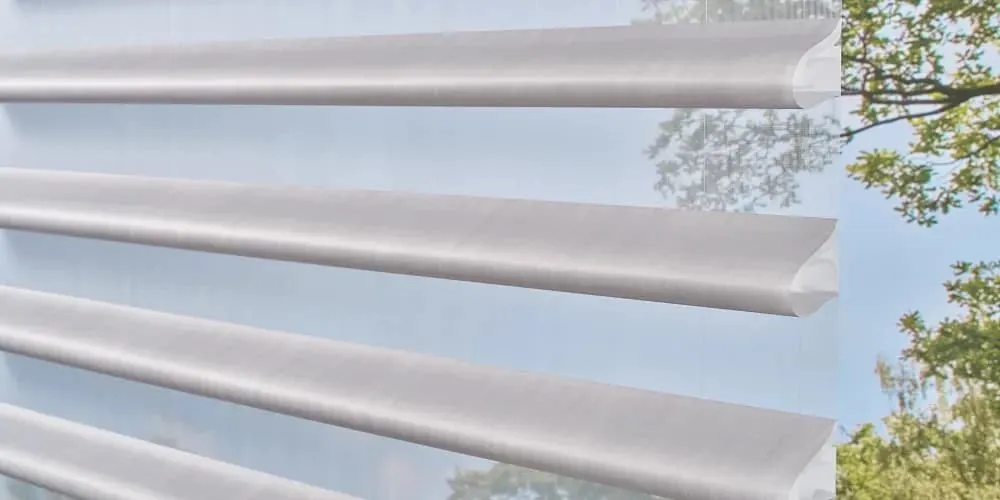
A fabric blind keeps the familiar shape of a horizontal blind but makes each vane from a soft, translucent fabric. That changes three things:
- The light. Daylight passes through the fabric, so the room is lit evenly rather than in stripes. The glare softens without the room going dim.
- The look. Fabric has texture and a gentle drape. It reads as softer and warmer than a hard slat, closer to a shade or a sheer drapery.
- The sound. Soft vanes do not clatter in a breeze from an open window the way metal or wood slats can.
You still keep the useful part of a blind: tilt the vanes to see out without raising anything, close them for privacy, or raise the whole blind to clear the glass.
Colours and textures
The fabrics lean toward textured neutrals: soft whites, warm creams, stone and grey tones that sit quietly against painted trim and let the light do the work. Because the material is translucent, a colour also tints the light that comes through it. A warm cream makes a north-facing room feel sunnier, while a cool grey calms a room that already gets too much afternoon sun. That is one more reason to see the samples at your own glass.
Light-dimming vanes
Aria offers a light-dimming option, and it is worth seeing in person. The vanes have two different opacities built into them. Tilt the vanes one way and the room dims softly; tilt them the other way and the room goes much darker. One blind gives you a gentle setting for the day and a darker one for the evening or a lie-in, without a second covering.
This is a good fit for bedrooms in the ranches, where a single big window faces the street, and for media rooms or home offices where the light needs to come down at certain times of day.
Where fabric blinds fit best
Every room is different, but these are the places we most often suggest them:
- Living rooms with strong sun. The water-facing rooms of South Dartmouth, where the low afternoon sun off the bay would otherwise hit the sofa and the television.
- Large picture windows. Aria is made for big windows, so a long ranch window can be covered without breaking it into several small blinds.
- Rooms that should feel soft. Dining rooms, sitting rooms and main bedrooms, where hard slats might feel too much like an office.
- Street-facing rooms. Tilted vanes give privacy from the pavement while light still comes through the fabric.
They are less suited to rooms with heavy steam or splashing, such as the spot above a bathtub or right over a kitchen sink. There, EverWood alternative wood or metal blinds are a more practical choice.
Operating the vanes
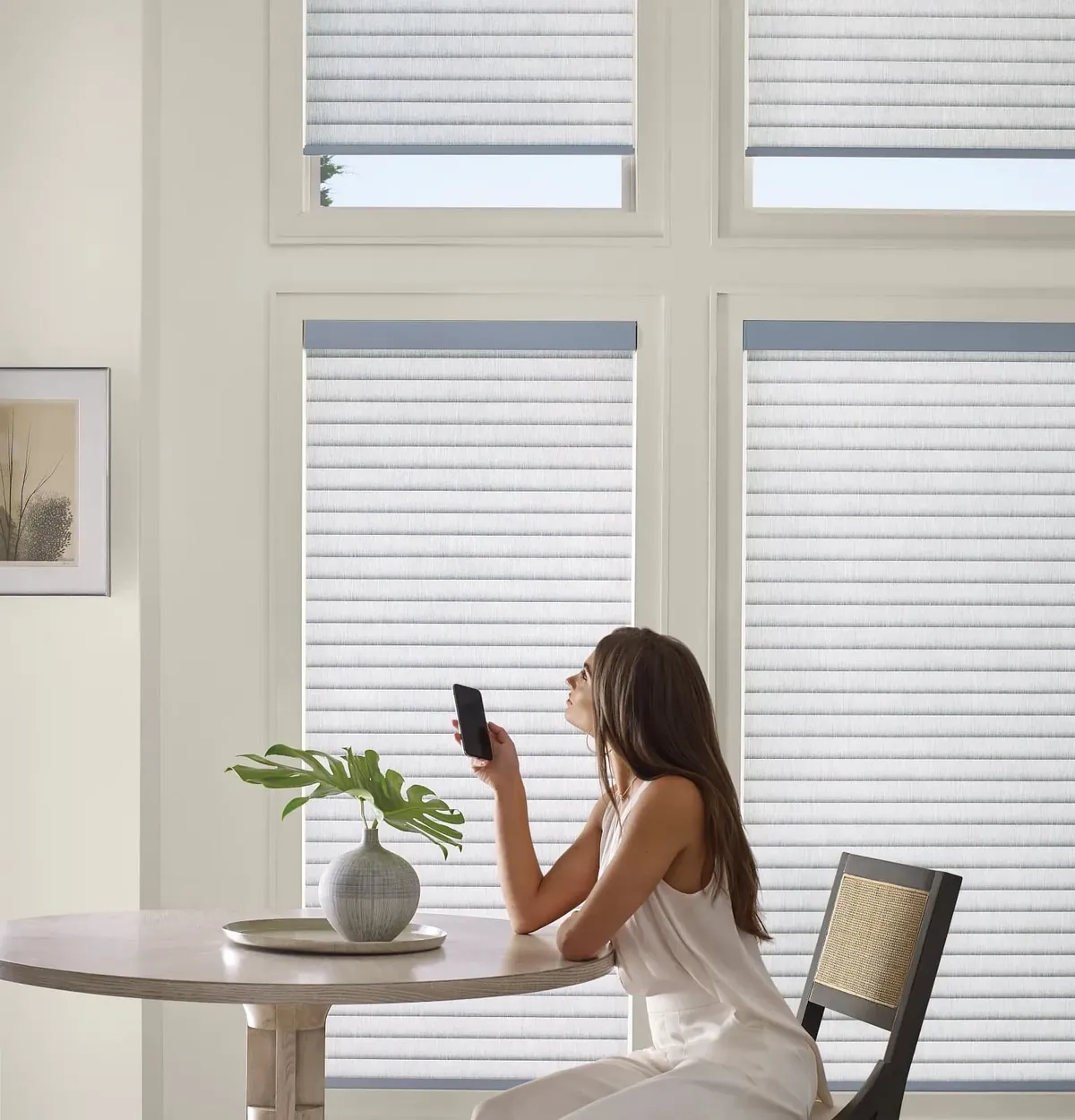
With Aria, a tilt bar turns the vanes, so there is no wand to twist. Lift controls vary by size and style. If you would rather not reach for the blind at all, ask about PowerView motorization, which lets compatible Hunter Douglas window coverings move from a remote, a phone app or a schedule. We will tell you which options apply to the size and fabric you choose.
Soft vanes or a cellular shade?
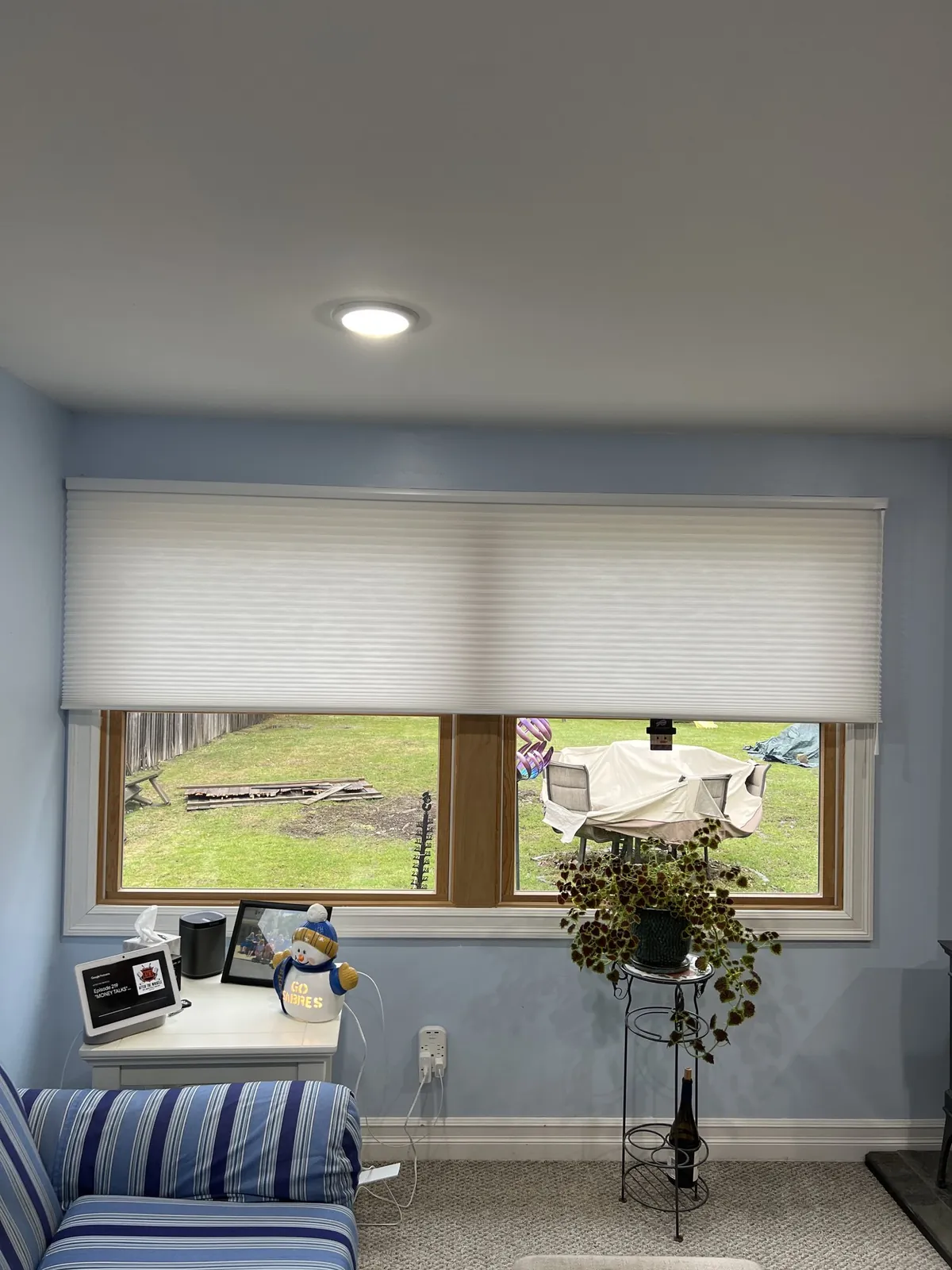
If your main concern is keeping a room warm in winter, it is worth looking at a cellular shade too. A honeycomb shade traps air in its cells, which is why a room holds its heat better with one lowered. Aria is the better choice when your priority is soft, controllable daylight and the ability to see out with the vanes open. Many houses use both: honeycomb shades in bedrooms and fabric vanes in the living room.
How a consultation works
You can start at the showroom, or we can bring the showroom to you: our vans carry samples, so you see the fabric in your own light, which matters a great deal with translucent material.
- Request a consultation online or with the call button, and we arrange a time.
- We visit, look at each window and talk about glare, privacy and how the room is used.
- You hold fabric samples up at the glass, morning or afternoon, to see how the light comes through.
- We measure every window ourselves and give you a free estimate.
- Certified Hunter Douglas installers fit the blinds and check that each one tilts and lifts as it should.

Fabric blinds from a Hunter Douglas Gallery dealer
Blinds & Designs is a Hunter Douglas Gallery dealer. We help you choose, measure each window, order and fit through certified Hunter Douglas installation, so one local business looks after the job from first visit to last check.
- In-home consultations, with vans carrying samples.
- Free estimates.
- Interior design consultations when you want help with the whole room.
- Repairs on blinds and shades you already own.
- Window covering automation with PowerView.
Browse the fabrics in the Hunter Douglas catalogue, then ask us to bring your favourites to the house. For every other style of blind, see our blinds page.
Where we work
From the North Dartmouth showroom we cover the South Coast and beyond, with showrooms in Franklin and Sagamore and shop-at-home visits across our territory. Town pages include Dartmouth, New Bedford, Westport, Fairhaven and Marion. If you live nearer Franklin or Sagamore, either showroom is a good place to start, and the in-home visit works the same way from all three: samples at your windows, a measure by us, and a free estimate on the blinds you choose.
Questions about soft-vane blinds
What is the difference between Aria and a sheer shade?
Aria has single fabric vanes that tilt like a blind. A sheer shade such as Silhouette suspends its vanes between sheer layers, so light is filtered even when the vanes are open.
Can I see out with the vanes closed?
Partly. Tilted open, you see out clearly. Closed, the fabric gives privacy while daylight still glows through it.
Will soft vanes darken a bedroom?
The light-dimming option on Aria has two opacities in each vane: tilt one way for soft dimming and the other for a much darker room.
Do fabric vanes suit a bathroom?
We would not put them right over a tub or shower. Steam and splashes are better handled by alternative wood or aluminium.
Can one blind cover a very large window?
Yes. Aria is made for large windows, so a long picture window can often be covered with one blind.
How do I keep them clean?
Dust lightly or use a vacuum with a soft brush. We will go over care for your fabric when the blinds are fitted.
Ready to see the fabric in your own light?
Translucent fabric is best judged at your own windows. Request a consultation and we will bring samples to you, or visit the North Dartmouth showroom to see the vanes first.
Every Hunter Douglas line we carry is on our Hunter Douglas Gallery dealer page.