
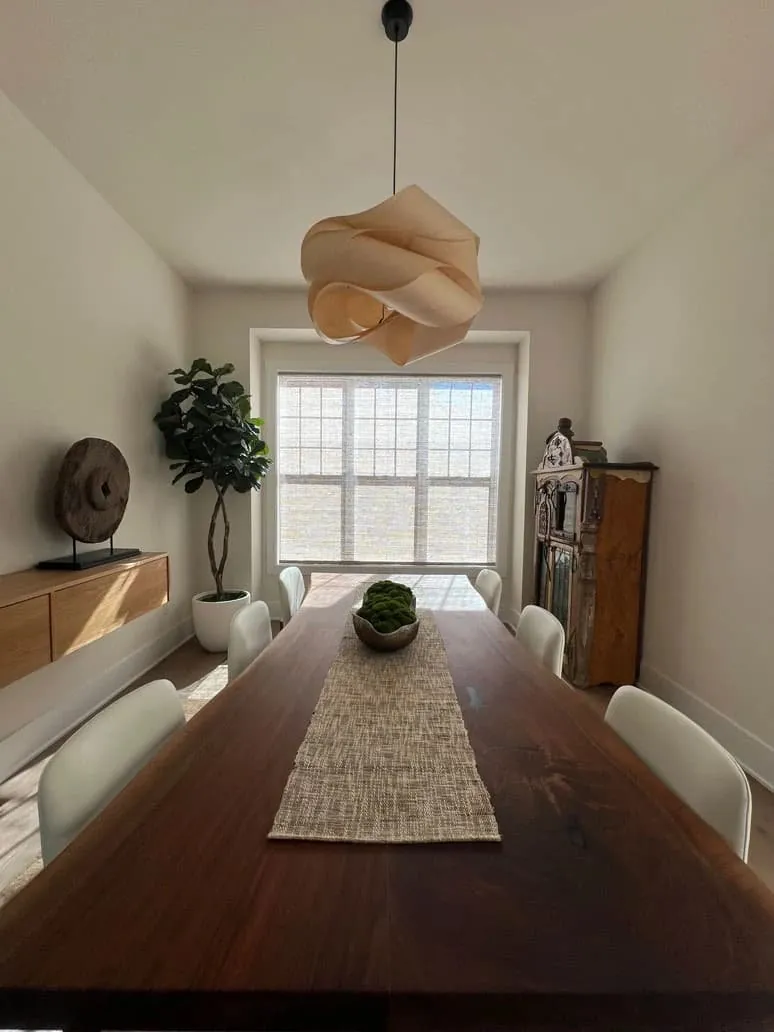
Shades for the houses around our North Dartmouth showroom
Custom shades are made for one window at a time, and around North Dartmouth that matters, because no two houses here have the same windows. We measure, order and install every shade ourselves, so it fits the opening it was made for.
Take a short drive from our Faunce Corner Road showroom and you pass every kind of window there is. Padanaram has older colonials and shingled capes with small-paned sash and trim worth keeping on show. The mid-century ranches off Faunce Corner and Slocum Road have broad picture windows and sliding doors. The farm properties out toward Russells Mills have deep-set nineteenth-century sash, and the water-facing rooms of South Dartmouth catch hard afternoon glare off Apponagansett Bay.
A shade that suits one of those windows can be wrong for the next. That is why we start with the window and the room, and only then talk about fabric.
Six shade families we sell and install
Hunter Douglas makes shades in several families. Each one handles light, privacy and comfort in its own way, and each has its own page with the lines we carry.
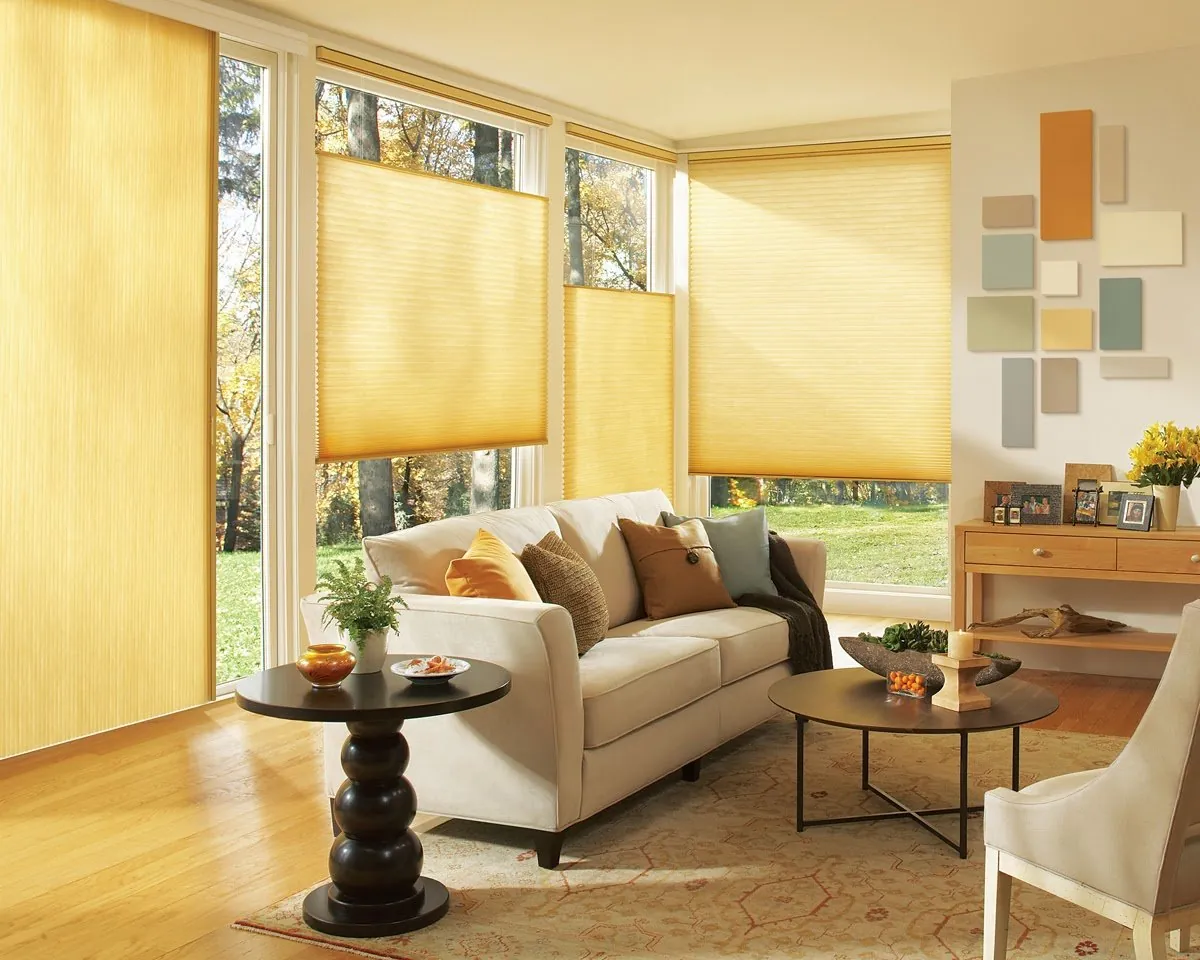
Cellular shades
Honeycomb cells that hold air at the glass, for rooms that run cold in winter or hot in summer. Duette, Applause and Sonnette.
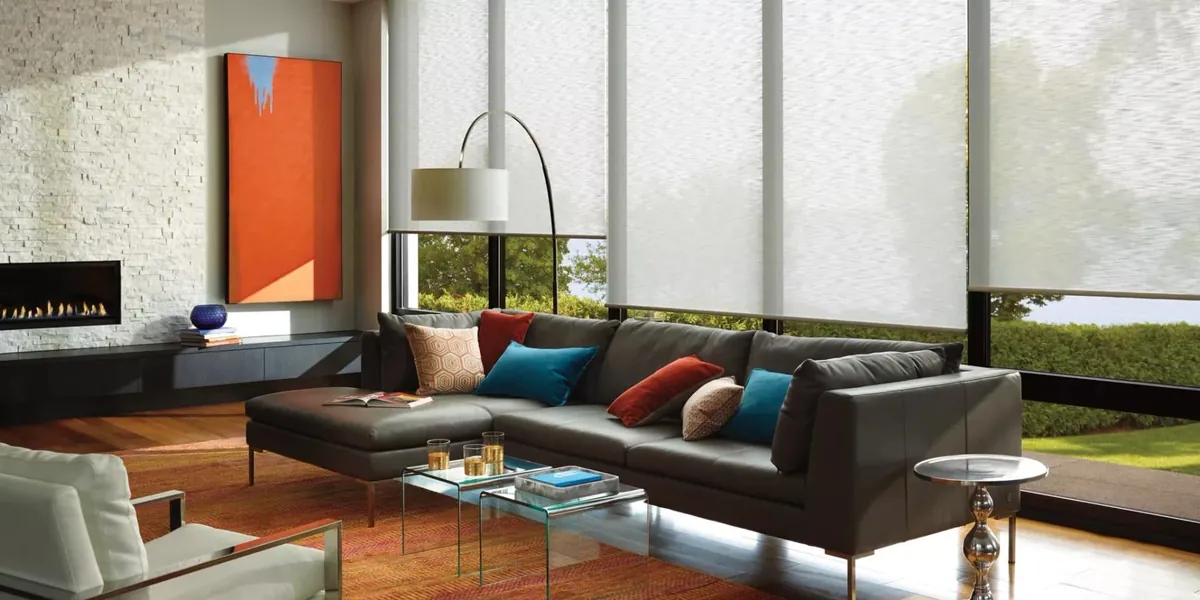
Roller shades
A single clean panel of fabric, from sheer screen to full blackout. Designer, Sonnette and Alustra.
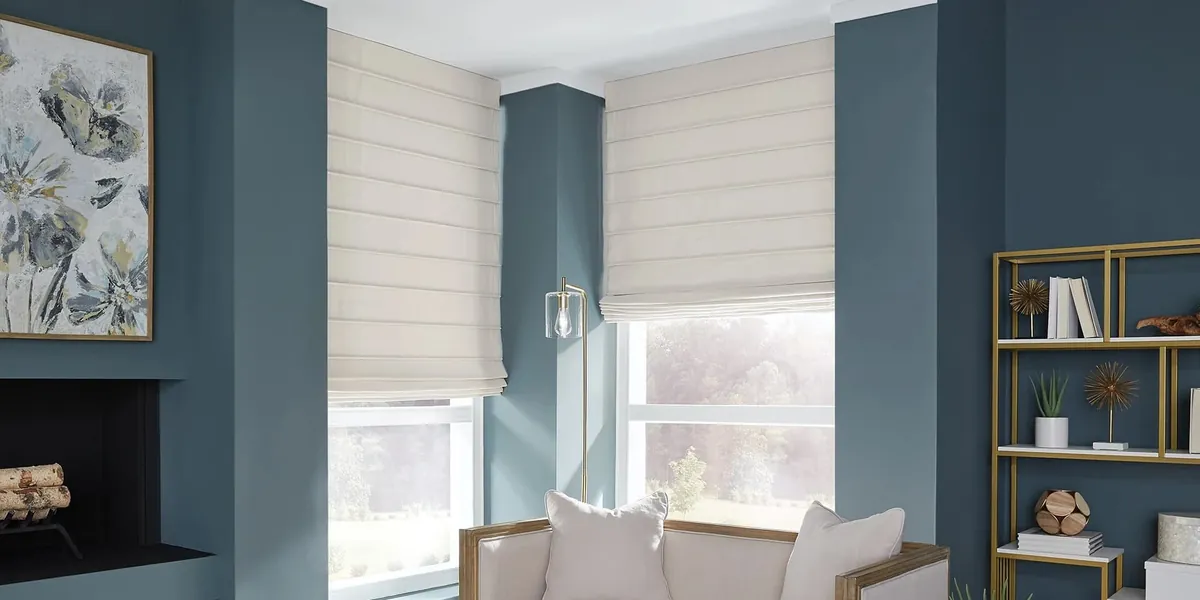
Roman shades
Soft folds of fabric with a tailored look, in flat and folded styles. Vignette and Carole Fabrics.
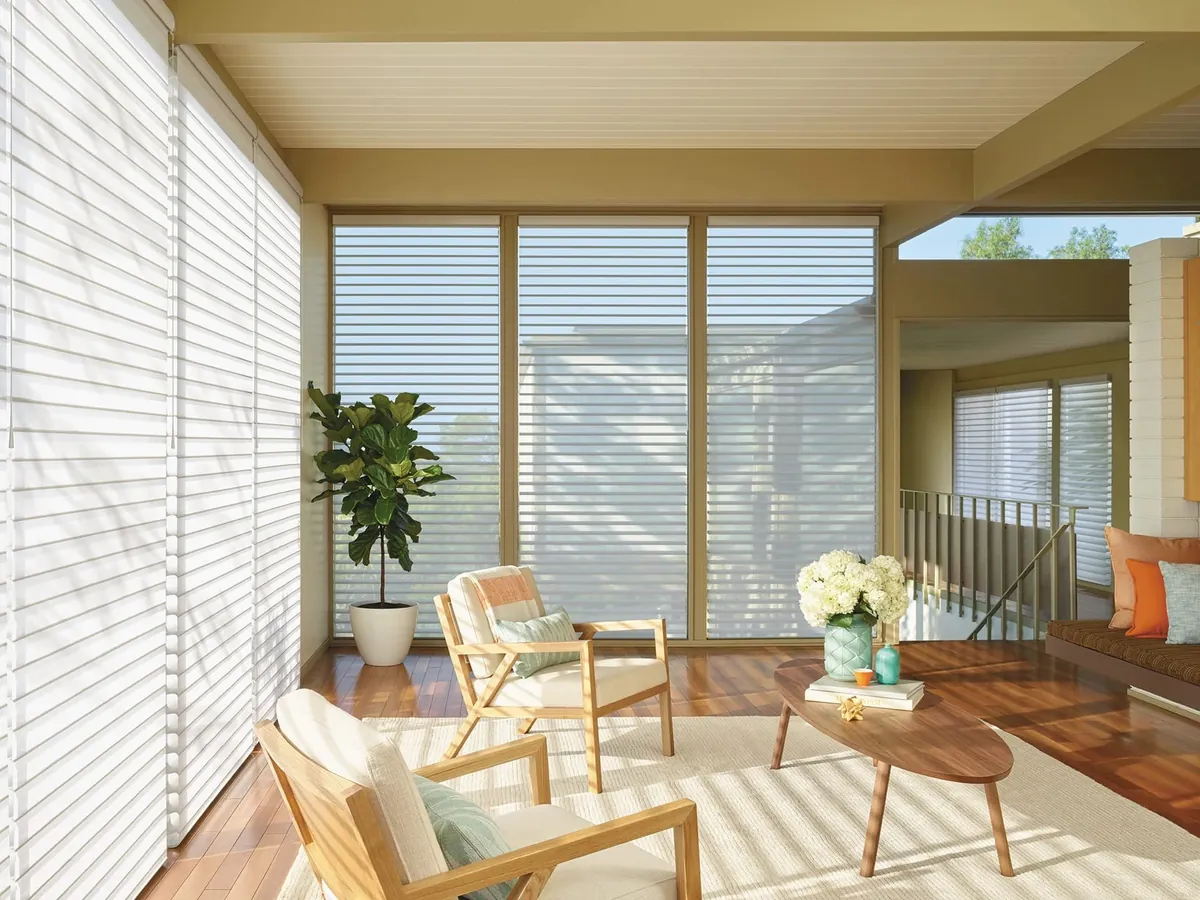
Sheer shades
Fabric vanes between sheer layers that tilt to soften the light. Silhouette, Pirouette, Luminette and Nantucket.
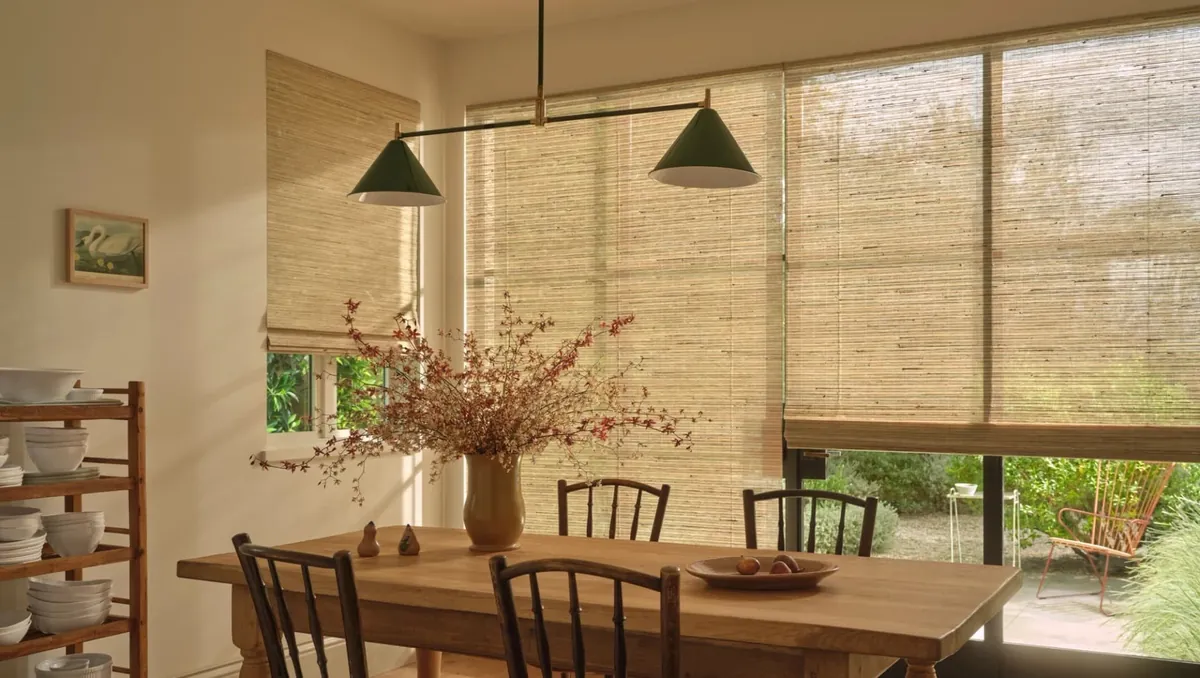
Woven shades
Natural textures and woven fabrics that bring warmth to a room, including Provenance.
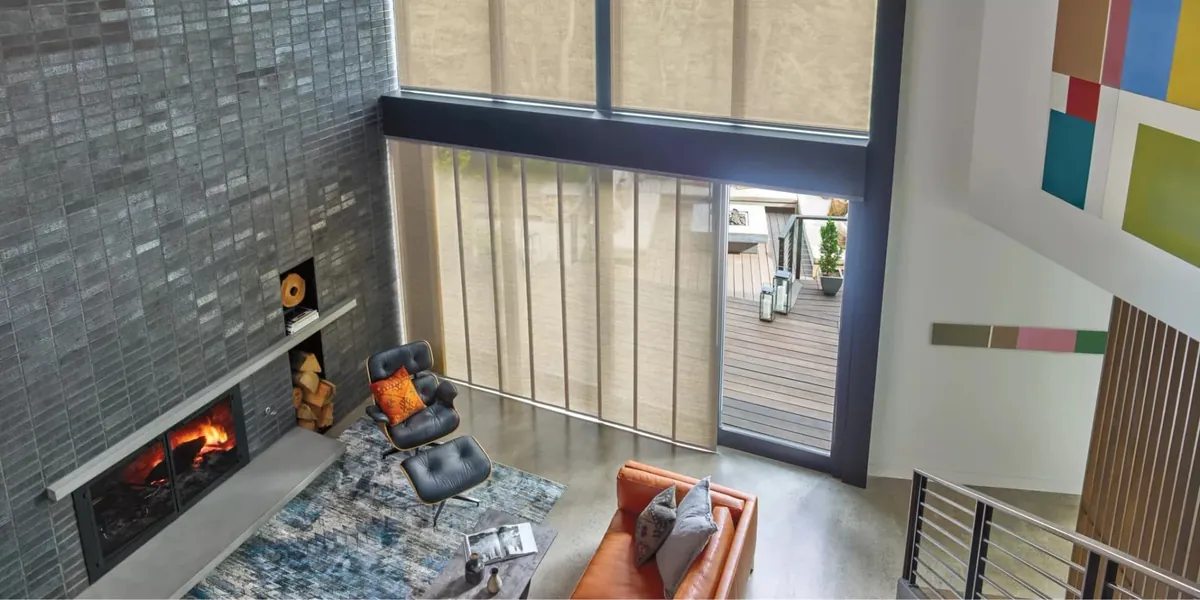
Vertical shades
Fabric that travels sideways, for sliders and tall, wide windows.
How to narrow the choice
Most people come to us with a room in mind rather than a product, and that is the right place to start. Three questions usually point to the right family.
What is the light doing? A room that takes low afternoon sun, like a South Dartmouth sitting room facing the bay, needs something that cuts glare without making the room gloomy. Solar screen roller shades and sheer shades both do that well. A bedroom that wakes you at dawn needs room-darkening fabric, which cellular, roller and Roman shades all offer.
How cold or warm does the room get? If the room is drafty in January or bakes in July, a honeycomb shade is the strongest choice, because its cells hold a layer of still air against the glass. We do not quote energy figures, but people feel the difference in an old bedroom.
What does the window look like? Small-paned colonial sash with good trim often looks best with an inside-mounted cellular or Roman shade that leaves the trim on show. A wide ranch picture window suits a roller or a sheer that disappears into a slim head rail. A slider wants something that travels sideways.
Fabric, colour and the way the shade opens
Once the family is clear, the choices get personal. Every Hunter Douglas shade comes in a range of fabrics, colours and textures, and the same colour can look quite different on a north window and a west one. That is why we would rather show you samples at your own glass than ask you to pick from a photo.
Then there is how the shade moves. Depending on the line, you can choose:
- Cordless lift, so there is nothing hanging at the window, a common choice in children’s rooms.
- Top-down, bottom-up, to let in sky and daylight while keeping the lower glass private.
- Retractable cord or wand control for tall windows where the bottom rail is out of reach.
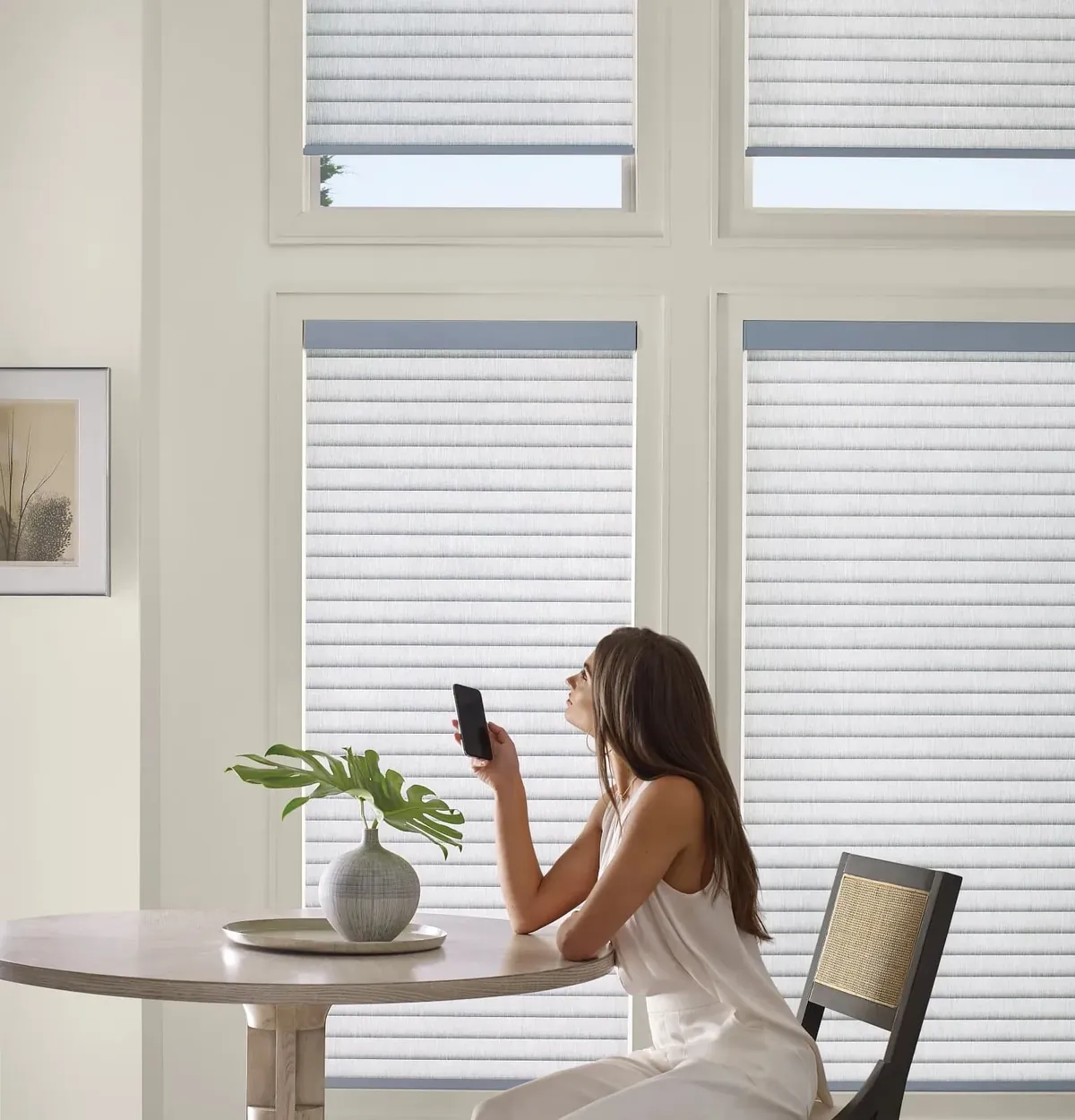
- PowerView motorization, so shades open and close from a remote, an app or a schedule. Our motorized blinds and shades page explains how it is controlled.
How custom shades are measured and fitted
The difference between a shade that looks right and one that almost fits is in the measuring. Older houses settle, and a window that looks square from across the room can be out by enough to show a gap down one side. So every window is measured on its own.
- Request a consultation through the form or the call button, and tell us about the rooms.
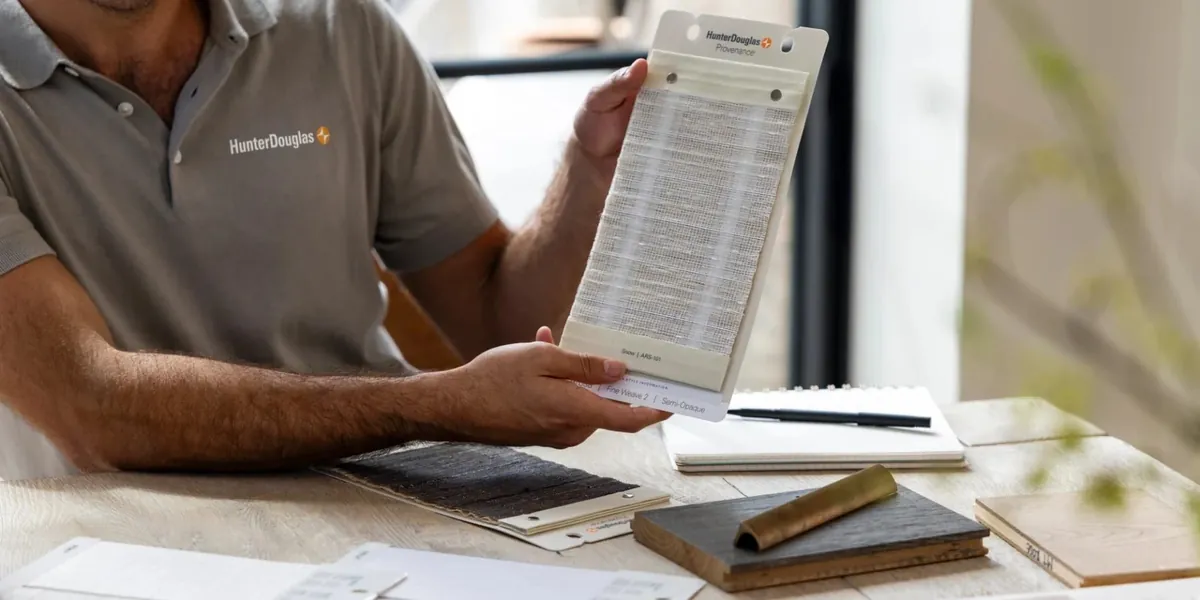
- We bring the showroom to you. Our vans carry Hunter Douglas samples across every shade family.
- We measure each opening, check frame depth for inside or outside mounting, and talk through the light in each room.
- You get a free estimate for the shades and options you chose.
- Certified Hunter Douglas installation follows, and every shade is checked before we leave.
If you want to browse first, the Hunter Douglas shade catalogue shows every family and fabric. Bring a list of favourites to the consultation and we will show you how they look in your rooms.
Mixing shades in one house
There is no rule that the custom shades in one house all have to be the same product. Plenty of the homes we work in mix them: honeycomb shades in the bedrooms for warmth and darkness, sheer shades in the living room for soft light, a solar screen in a sunroom, and a woven shade in the dining room for texture. The trick is to keep the colours and head rails consistent enough that the house looks planned from the street. If you want help pulling that together, we offer interior design consultations as well.
Why choose a Hunter Douglas Gallery dealer
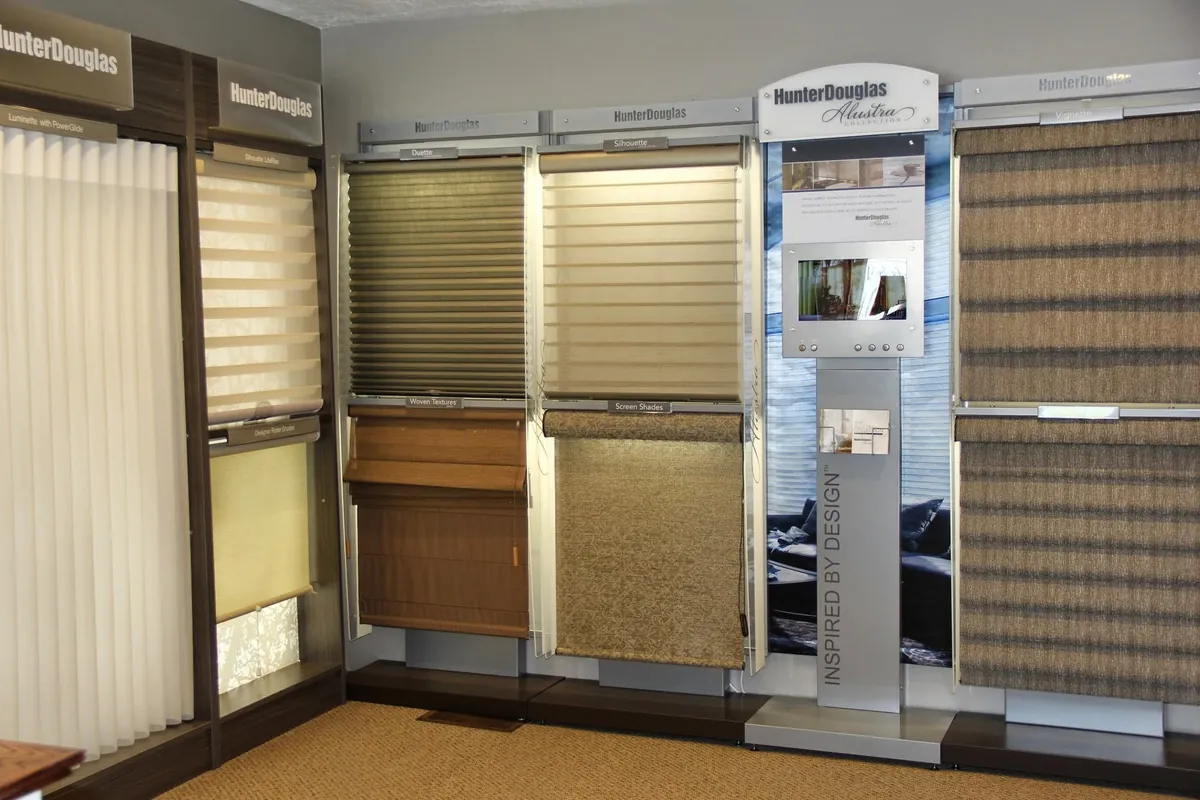
Blinds & Designs is a Hunter Douglas Gallery dealer. We carry every Hunter Douglas shade family, and our vans bring the samples to your home.
- Certified Hunter Douglas installation
- In-home consultations, with vans that carry samples
- Free estimates on every project
- Interior design consultations
- Repairs on the shades and blinds you already own, through our blind and shade repair service
Explore the full range of Hunter Douglas products we carry.
Custom shades questions
What is the difference between shades and blinds?
Blinds use slats or vanes of wood, metal or vinyl that tilt. Shades use fabric that lifts, rolls or folds. Our guide on shades or blinds walks through which suits which room.
Which shade is best for glare off the water?
For low afternoon sun, a solar screen roller shade or a sheer shade usually works well, because you keep the view while the glare is softened. A heavier light-filtering cellular shade is another option. See our guide to the best shades for sun and glare.
Can shades fit inside old, deep window frames?
Often, yes. Deep nineteenth-century frames usually have room for an inside mount. We measure the depth of every frame at the consultation and suggest an outside mount where a frame is too shallow or out of square.
Can I motorize my shades?
Many Hunter Douglas shades can be motorized with PowerView, controlled from a remote, an app or a schedule. Some need it chosen at the start, so tell us at the consultation if you might want it.
Do I need to measure my own windows first?
No. We measure every window ourselves at the in-home consultation, which is part of how we make sure each shade fits.
Do you repair shades you did not sell?
Yes. We welcome repairs on window coverings you already own. Mention it when you request a consultation.
Start with a consultation
Custom shades are easiest to choose at your own windows, with samples in your hand and the light in the room. Request a consultation and we will bring the showroom to you, measure every window and give you a free estimate. You are also welcome at the North Dartmouth showroom.